305 stores. £2.2 million a year off the electricity bill.
A national LED upgrade across the whole Topps Tiles estate, replacing twin 70W fluorescent fittings with 59W high-CRI LED battens, installed around trading stores at up to twelve sites a week. Energy was the driver. Getting the colour of the light right was the point.
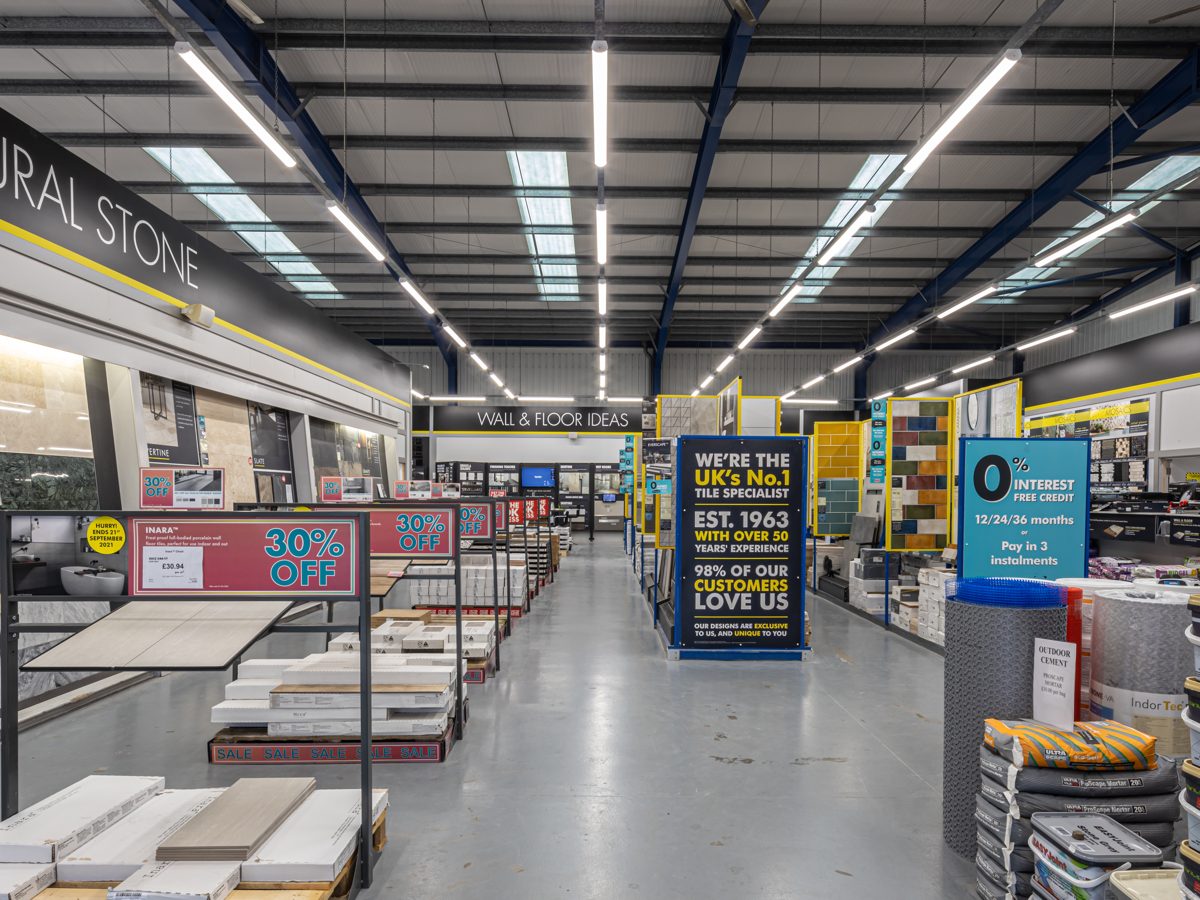
The problem wasn't the energy. It was the colour.
Topps Tiles wanted to move the whole estate from fluorescent to LED, and the business case was straightforward: cut the lighting load, cut the bill. The first attempt, 25 stores with a previous contractor, delivered the energy saving and created a new problem. Customers were choosing tiles in store, fitting them at home and finding they were a different shade to the ones they thought they'd bought.
The stores had been fitted with a low colour rendering (CRI), high colour temperature product on the advice that a whiter, cooler light was "closer to daylight". It isn't. Colour temperature is how warm or cool the light looks. CRI is how accurately it shows colour. A cool light with poor colour rendering makes a beige tile look grey and a warm grey look blue. For a business that sells colour, it was the wrong specification.
What ILUX specified
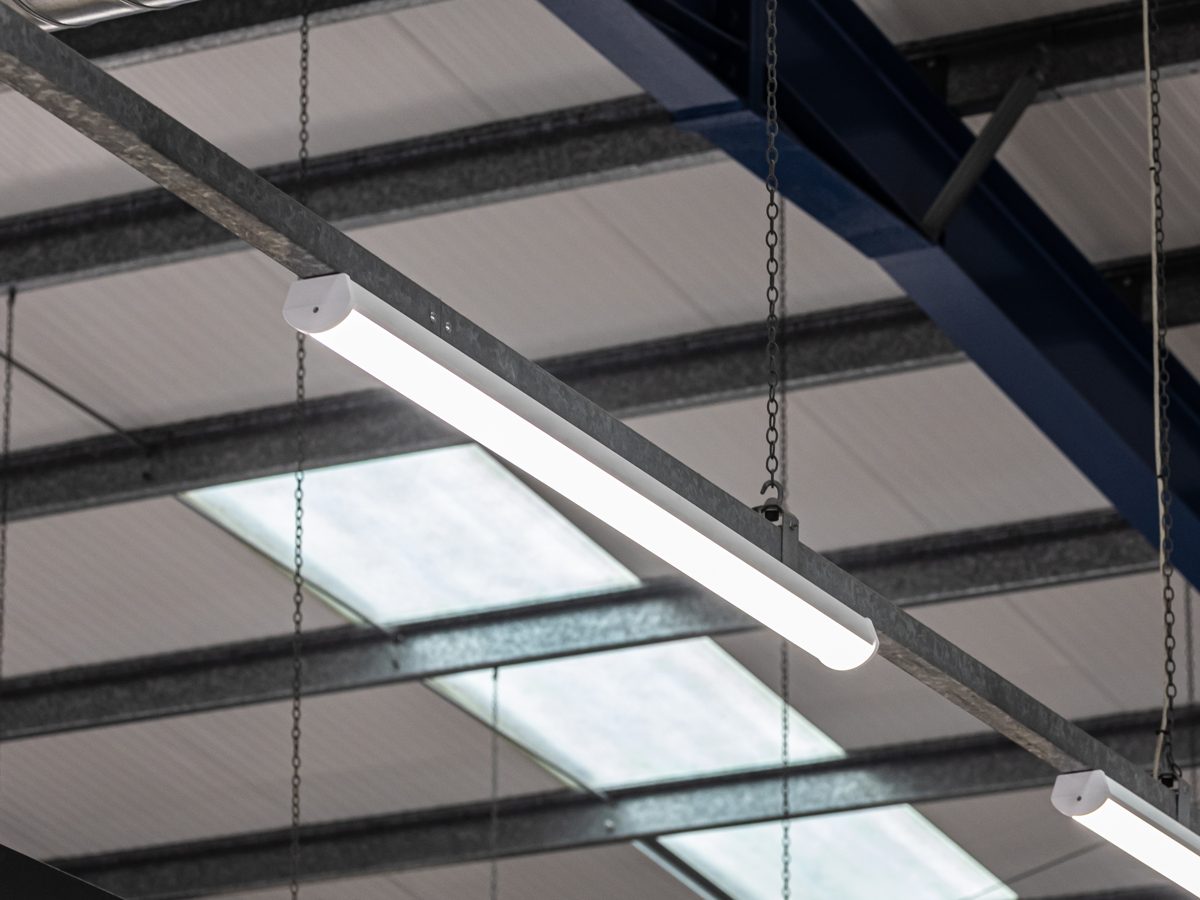
We started from the product, not the fitting count. The specification was a 59W LED batten at 4000K with a colour rendering index above 90, so the light in store shows tiles as they will look once they're laid at home. No batten on the market met that combination at the output and price the roll-out needed, so the manufacturer built a custom LED board for its standard batten body to hit the spec for this project.
- 59W LED batten, 4000K, CRI 90+, replacing twin 70W fluorescent fittings (154W with ballast)
- Custom LED board developed with the manufacturer, LUG, to meet the colour and output spec
- Seven-year parts and labour warranty across the estate
- All emergency lighting replaced at the same time, so every store left with compliant escape lighting
- Like-for-like positions, so no redesign of the store layout or ceiling
The numbers
Across 305 stores, with an average of 95 fittings per store, the roll-out replaced roughly 29,000 luminaires. Each fluorescent fitting drew about 154W including ballast; each LED batten draws 59W. Stores trade around 64 hours a week, so every fitting runs for about 3,300 hours a year.
- Lighting load per store down from 14.6kW to 5.6kW, a 62% reduction
- Around 9.2 million kWh saved a year across the estate
- About £2.2 million a year off the electricity bill at 24p per kWh, roughly £7,200 per store
- Around 1,900 tonnes of CO₂ avoided every year
Twelve stores a week, without closing one.
Supply and fit was carried out in trading stores, working around customers and staff under a site-specific method statement for every store. At the peak of the programme ILUX was completing twelve stores and over 1,100 luminaires a week, with no incidents across the roll-out.
Why it matters for a multi-site retailer
An LED roll-out is usually sold on the energy line alone. The Topps Tiles project shows the other half: the product has to be right for what the business does, and the roll-out has to run at pace without disrupting trade. Get the specification wrong and the saving comes with a cost you can't see on the invoice. Get it right and you cut the bill, the maintenance and the carbon in one programme, with a warranty that covers the lot for seven years.
ILUX handles the whole of an estate-wide lighting upgrade, from specification and LED retrofit to emergency lighting, and pairs it with energy procurement so the saving shows up on the contract, not just the spec sheet.
In store.
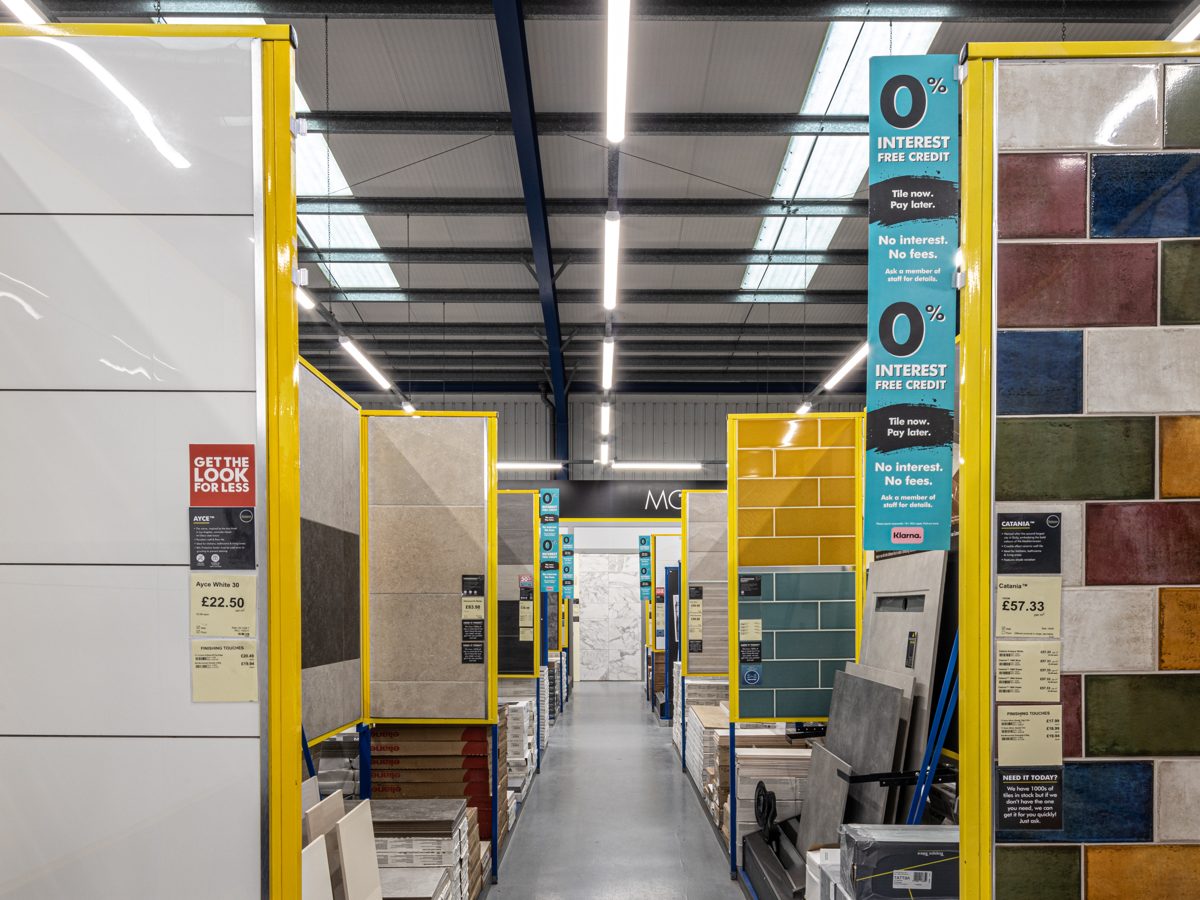
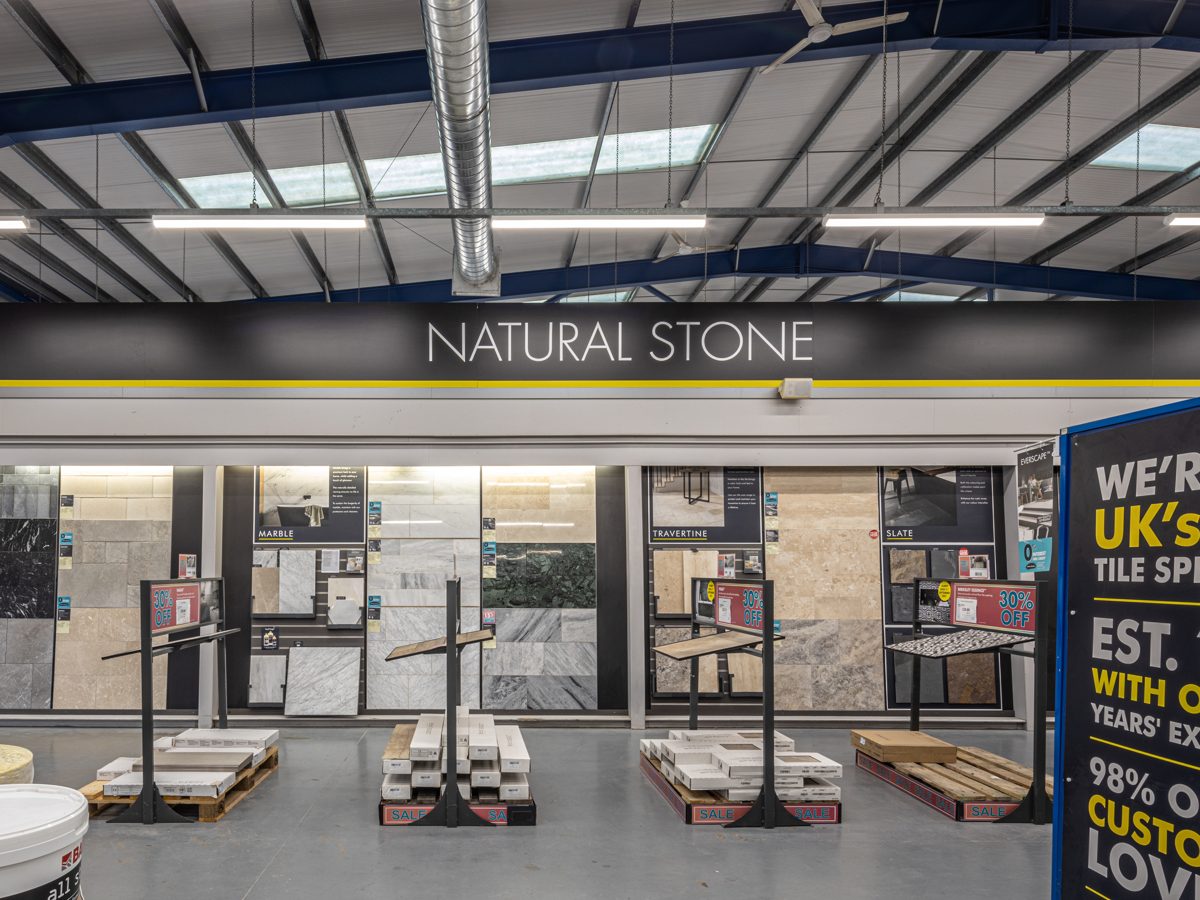
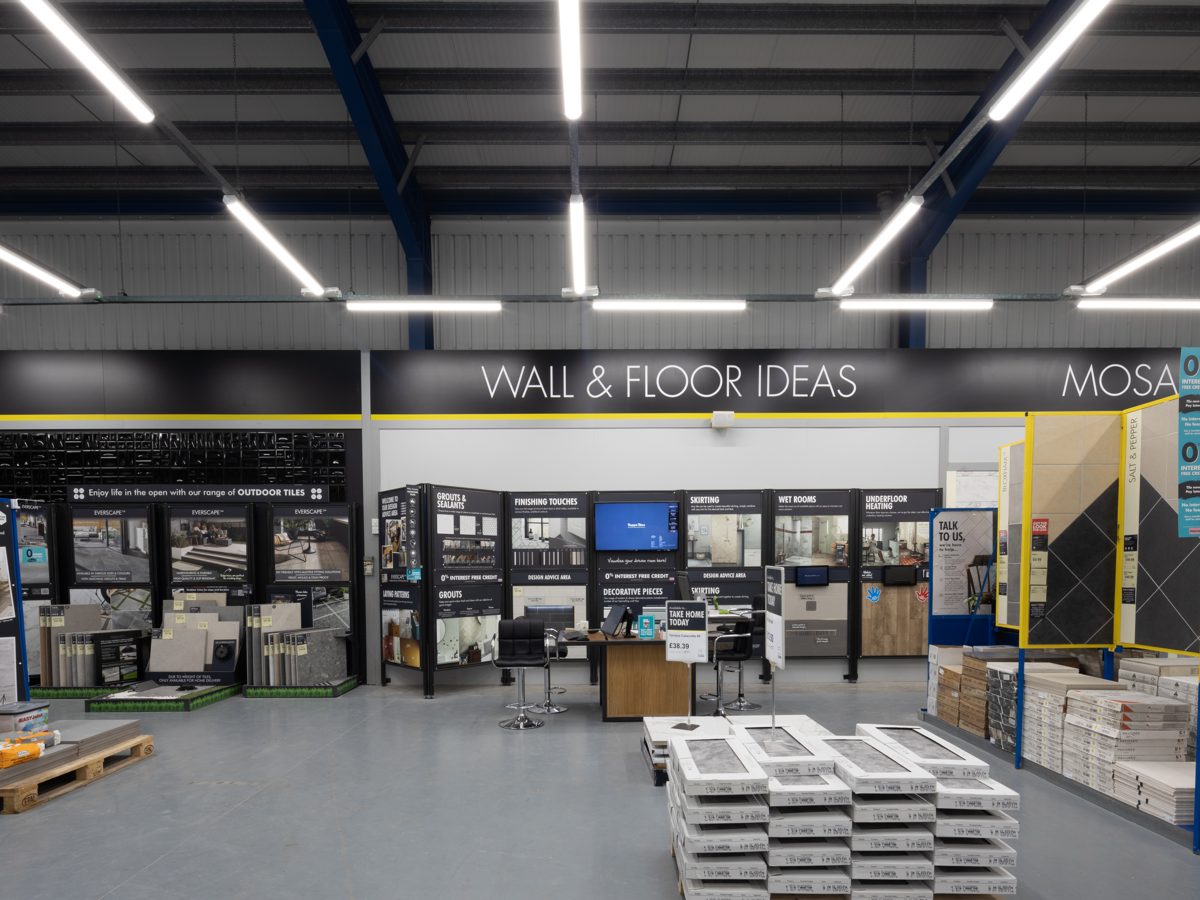
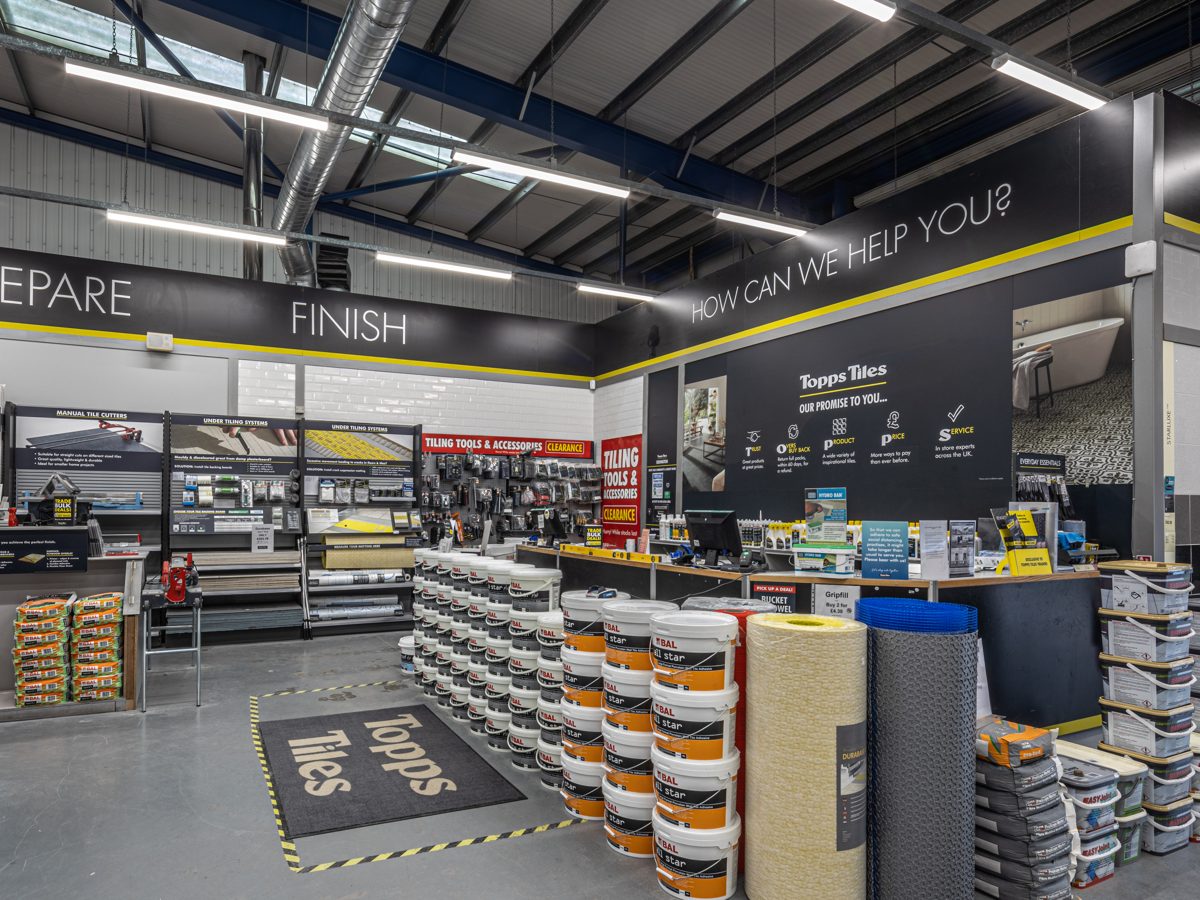
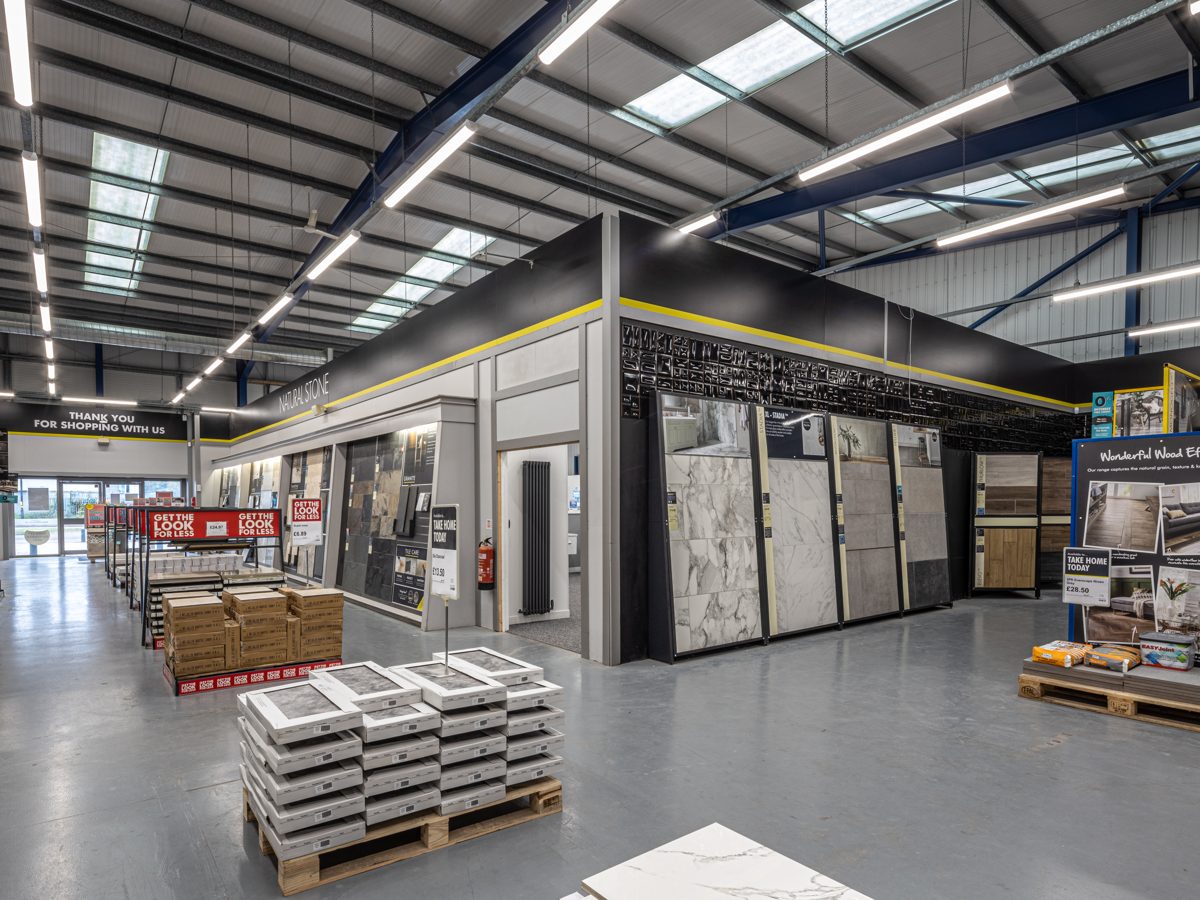
The new battens in place across the estate: even light down the aisles, and tiles that look the same colour in the showroom as they do on the wall at home.
Common questions.
What is CRI and why does it matter for retail lighting?
The colour rendering index measures how accurately a light source shows colours compared with natural daylight, on a scale to 100. Fluorescent and cheap LED fittings often sit around 80. Above 90, colours look as they will in daylight, which is what a business selling tiles, paint, fabric or food needs. Colour temperature (the warm-to-cool look, measured in kelvin) is a separate choice and doesn't fix poor colour rendering.
How is an LED saving calculated?
Fittings × (old wattage including ballast − new wattage) × annual hours gives the kWh saved; multiply by your unit rate for the money and by the current UK grid carbon factor for CO₂. We build the calculation from your own fitting counts, trading hours and tariff, so the figure in the business case is the figure on the bill.
Can a roll-out this size be done without closing stores?
Yes. Topps Tiles stayed open throughout. Each store had its own method statement, the work was sequenced by area, and at peak we were completing twelve stores a week with no incidents.
What warranty comes with an LED upgrade?
This project carried seven years parts and labour. The length depends on the product chosen; we specify fittings whose warranty matches the payback period so the saving is protected for the life of the business case.
The right light, at estate scale.
Specification, supply, installation and emergency lighting across every site you run, with the saving worked out from your own numbers before anything is ordered.