PAT testing
Portable appliance testing on a risk-based interval, so every kettle, till and power tool on site has an in-date pass label and a record behind it.
Why it matters
The Electricity at Work Regulations 1989 require electrical equipment to be maintained so far as reasonably practicable to prevent danger. The IET Code of Practice for In-Service Inspection and Testing (5th edition) sets out how to do that for portable appliances, based on the type of equipment and how it's used rather than a fixed calendar interval.
ILUX applies that risk-based interval per site and equipment type, so a kitchen kettle and an office monitor aren't tested on the same clock.
What's included
- Visual inspection of every appliance for damage to plugs, cables and casings
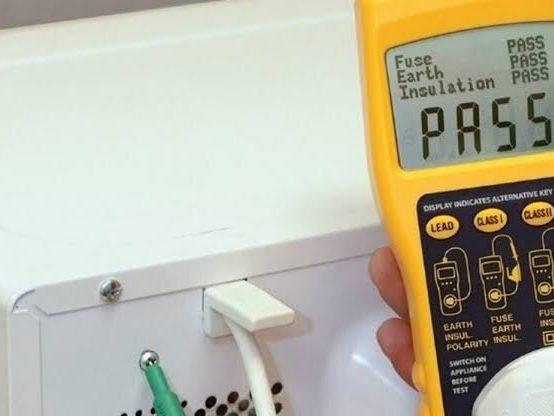
- Electrical testing (earth continuity, insulation resistance) per the IET Code of Practice
- Pass label with test date and next-due date fixed to each appliance
- Removal from service of any appliance that fails, with a replacement note raised
- Asset register covering every appliance across every site, by location
- Certificate of testing, with the failed-item list ready for procurement
New appliances added between visits are picked up and added to the register at the next scheduled test.
PAT testing is one part of the electrical picture.
Fixed wiring is tested and certified separately. See how the two sit together in your compliance record.
How it fits a multi-site contract
PAT testing runs to its own risk-based cycle within the same contract as your other planned visits, with results in the portal alongside fixed wire and fire safety records for the same site.
Common questions.
Is PAT testing a legal requirement?
There's no fixed legal requirement to PAT test at a set interval, but the duty to maintain equipment safely under the 1989 Regulations exists regardless. Testing to the IET Code of Practice is the standard way to demonstrate that duty is met.
How is the testing interval decided?
By equipment type, how often it's used and the environment it's in. A handheld tool on a building site is tested more often than a desk lamp in an office, and we set intervals per site accordingly.
What happens to appliances that fail?
They're removed from service and labelled as failed, with the finding logged so you can decide whether to repair or replace before it's put back into use.
Every appliance, in date.
Send us your sites and appliance counts and we'll show you what one schedule looks like.