Emergency lighting installation
Emergency lighting designed and installed to BS 5266-1, with self-test systems fitted where they cut the manual testing burden across an estate.
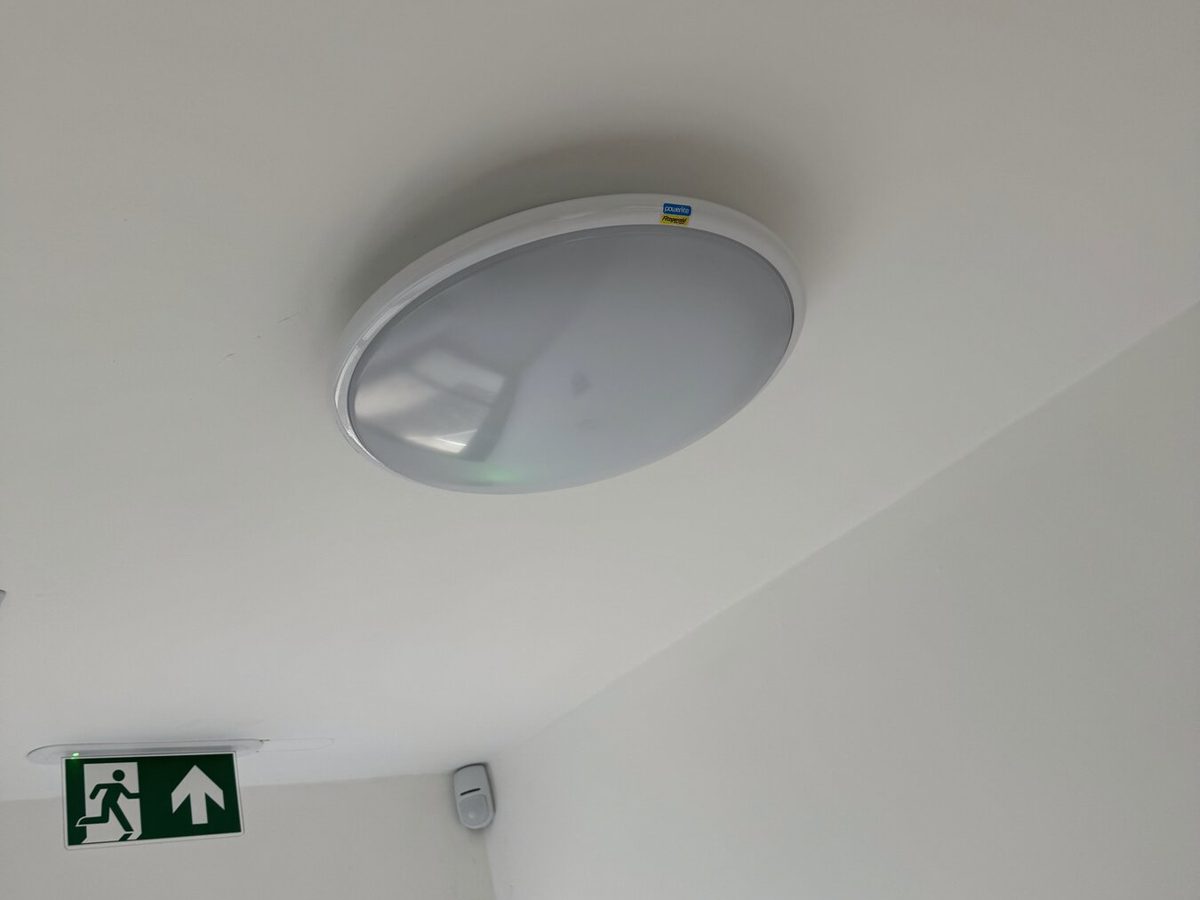
Why it matters
If the mains supply fails, people need to see their way out. BS 5266-1 sets how emergency lighting is designed and installed: escape route lighting, open area (anti-panic) lighting and coverage for high-risk task areas, each with a minimum duration and light level.
ILUX designs and installs to that standard, and hands over a certificate that shows the coverage matches the building.
What's included
- Design to BS 5266-1 covering escape routes, open areas and high-risk task areas
- Fitting selection: maintained, non-maintained or self-test, matched to the site
- Installation into new or existing circuits, coordinated with the main lighting scheme
- Self-test systems specified where reducing manual duration testing makes sense
- Signage coordinated with escape route fittings so both read as one system
- Certificate of design and installation issued at handover, held in your portal
Once installed, the system needs ongoing testing to stay compliant — that's a separate, recurring visit, not a one-off.
Installation is the start, not the whole requirement.
BS 5266-1 sets a monthly function test and an annual full-duration test after install. See how that testing is scheduled and certified going forward.
Fitting into a wider lighting scheme
Emergency lighting is usually designed alongside the main scheme rather than after it, so fittings, circuits and controls share containment instead of being added as an afterthought.
Common questions.
Do you install into an existing building or only new fit-outs?
Both. Most installs go into an occupied building, tied into the circuits and containment that already exist.
What's the benefit of a self-test system?
It runs the monthly and annual duration tests itself and flags failures, so someone isn't manually testing every fitting on site.
Do we get a certificate at handover?
Yes, a design and installation certificate covering every fitting, held in your portal alongside the ongoing test records.
Escape routes, covered.
Send us your building layout and we'll show you what the coverage needs to look like.