Electrical faults & repairs
Tripping circuits, lost supply and faulty sockets, made safe and repaired against a response time set by what the fault is stopping.
Typical faults we attend
- Circuits tripping repeatedly or on load
- Full or partial loss of supply to a site
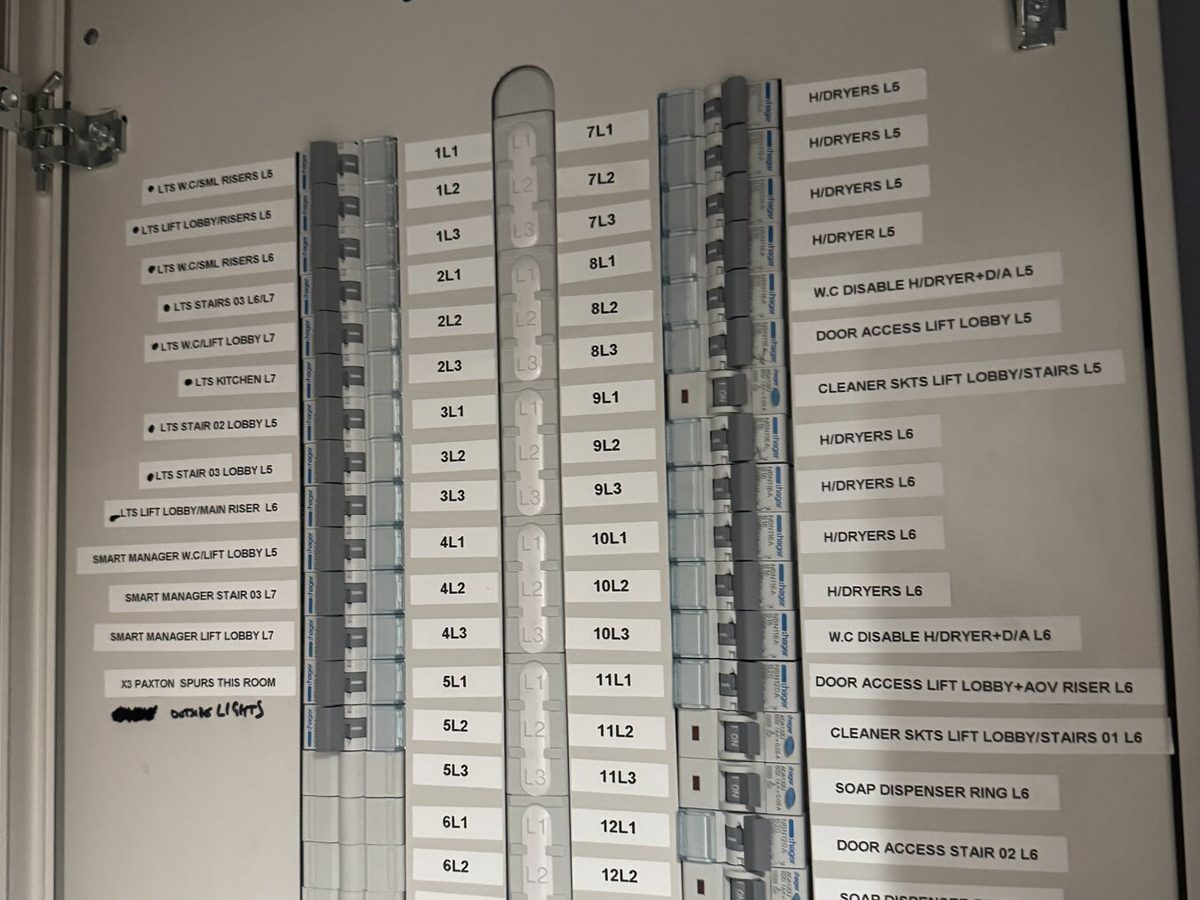
- Distribution board faults, including RCD and breaker failures
- Damaged or unsafe sockets and switches
- Faulty emergency stop or isolation circuits
- Burning smells, sparking or exposed wiring
How a call-out runs
You log the fault with the site and what's affected, we assign a priority based on what it's stopping, and an engineer is dispatched against the response time set in your contract. Any remedial work is carried out to BS 7671, made safe on arrival where there's a life-safety risk, and reported in your client portal with photos and a completion note. See response times & coverage for how priorities are set.
Most electrical faults show up before they trip.
A fixed-wire test to BS 7671 finds failing insulation, loose connections and overloaded circuits before they take a site down. Ask about scheduling one alongside your other planned visits.
Common questions.
Is a total power loss always the highest priority?
Usually, yes. Loss of supply is treated as our highest priority when it stops a site trading or creates a safety risk. See response times & coverage for how each level is defined.
Will the engineer leave a certificate?
Where remedial work is carried out, you get a completion report in your client portal, and a minor works certificate where the work requires one under BS 7671.
What if the fault turns out to be bigger than expected?
The engineer will make the site safe first, then come back with a fixed price for the wider repair before doing anything beyond that.
Power fault today, fixed on schedule.
Log the fault and we'll confirm the priority and the engineer straight away.