Faults fixed. Doors kept open.
One call-out route across fire & safety, electrical, security & access, and mechanical & fabric. Defined response times by priority, an engineer dispatched UK-wide, and live updates in your client portal.
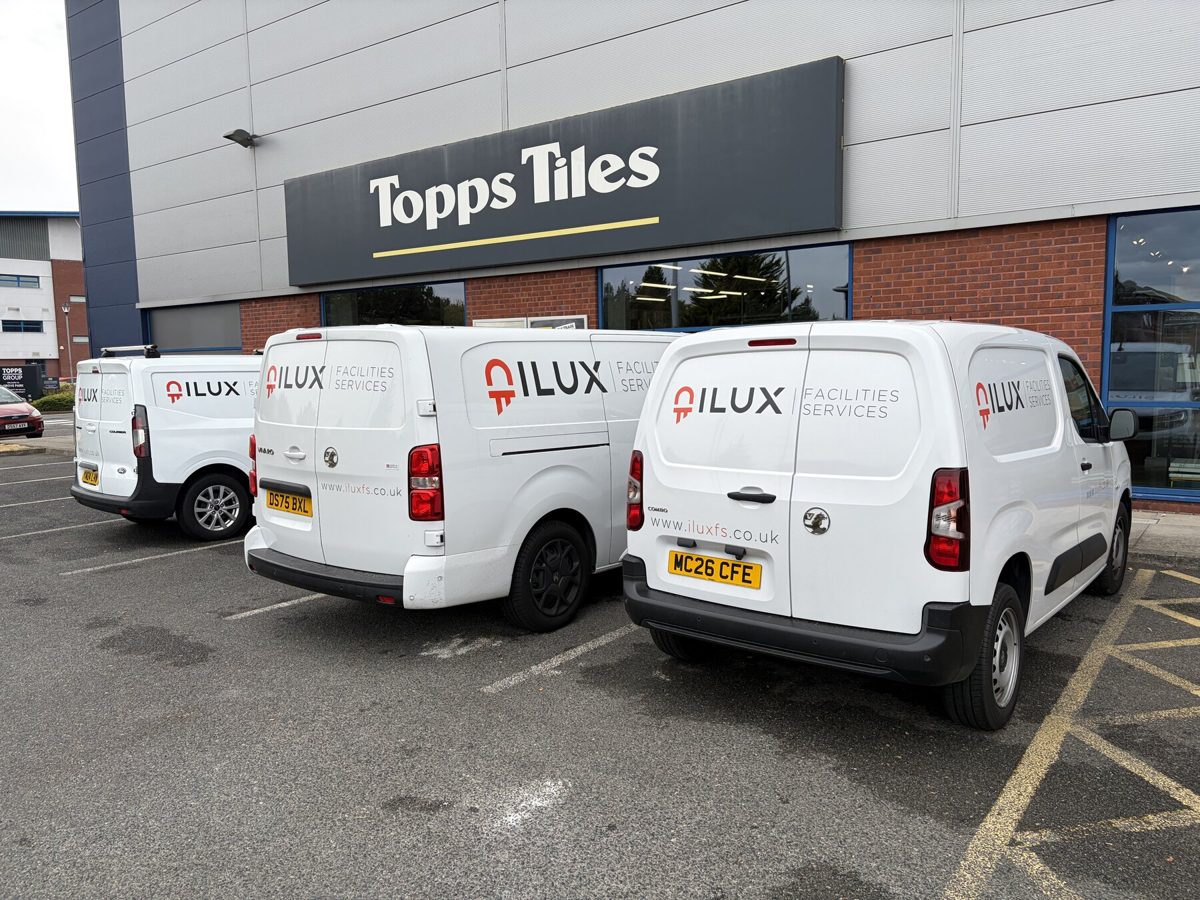
A fault reported at 9am shouldn't still be a fault at 5pm.
A reactive contract with ILUX gives you one route in, for every trade, at every site. You log the fault, we assign a priority based on what it's stopping you doing, and an engineer is dispatched against a response time written into your contract. You can watch the job move from logged to attended to fixed in your client portal, without ringing to ask.
What you get
- One number and one web form for every reactive fault, any trade
- A priority and a response time set the moment the job is logged
- Engineers dispatched UK-wide, not limited to one region or trade
- Live status in your client portal, from logged to fixed
- A completion report and, where applicable, a certificate after every visit
- One invoice, whatever the mix of trades across the month
The priority is set by what the fault is stopping, not the trade.
A fire panel fault and a broken shutter that leaves a unit unable to trade are both treated as urgent. See how each priority level is defined and what "attend" means in practice.
How to reach us, and what we cover.
Start with how a job gets to us, then the trades we respond to. Every route lands in the same place: one job, one priority, one report.
Response
Response times & coverage
Priority levels, what "attend" means and how UK-wide coverage works.
Response times & coverageHow to log a call-out
Three ways to reach us and what to have ready when you call.
How to log a call-outBy trade
Electrical faults & repairs
Power loss, tripping circuits and electrical faults, made safe and fixed.
Electrical faultsFire & safety system faults
Fire alarm, extinguisher, door and sprinkler faults between planned visits.
Fire & safety faultsSecurity & access faults
Intruder alarm, door entry and access control faults, attended and fixed.
Security & access faultsLighting failures
Internal, external and emergency lighting failures put right fast.
Lighting failuresRoller shutter faults
Shutters and doors stuck open, stuck shut or not closing safely.
Roller shutter faultsAir conditioning faults
Cooling, heating and ventilation faults across split, VRF and cassette systems.
Air conditioning faultsPlumbing & drainage
Leaks, blockages and drainage faults that put a site out of action.
Plumbing & drainageGeneral fabric repairs
Doors, glazing, flooring and fixtures that need putting right between refits.
General fabric repairsFrom logged to fixed.
Three steps, visible in your client portal from the moment you log the fault.
Log it
Web form, phone or client portal. Site, fault, priority — logged in minutes, not a form for its own sake.
Engineer dispatched
An engineer is assigned against your priority's response time, with the fault details already in hand.
Fixed and reported
The job is closed with a completion report in your portal, and a certificate where one applies.
Common questions.
Do we need a planned contract to use reactive?
No. Reactive maintenance stands on its own, though most clients find it works best alongside a planned maintenance contract, since faults picked up on a service visit and faults called in between visits end up in the same schedule and reporting.
What counts as an emergency?
Anything that's a life-safety risk or stops a site trading is treated as our highest priority. See response times & coverage for how each priority is defined.
Can different sites have different response times?
Yes. Response times are agreed per site or per region in the contract, so a flagship store and a back-office site can sit on different priorities where that reflects how they're used.
Do you cover trades outside the list above?
The list covers the trades we see most often. If a fault doesn't fit neatly into one of them, log it anyway — we'll assign the right engineer.
Fault today, fixed on schedule.
Log the fault and we'll confirm the priority and the engineer straight away.